
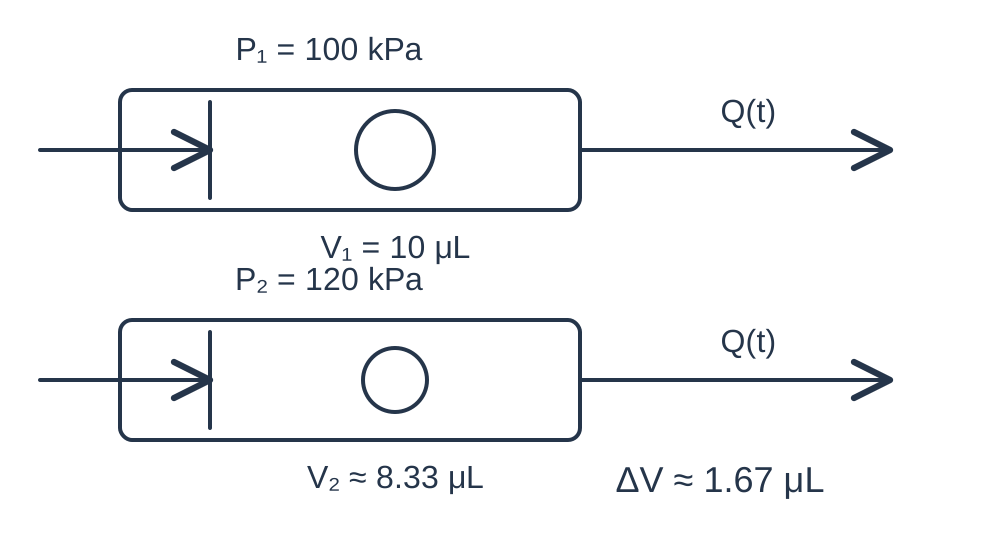
Why Do Air Bubbles Delay or Bias Piston Pump Dispensing?
A completed piston stroke does not prove that the intended liquid volume reached the vessel. Bubble compression temporarily stores displacement; expansion can then cause a trailing dispense or affect the next cycle. Locate where bubbles first appear and compare synchronized pressure and individual dispense masses before and after priming.
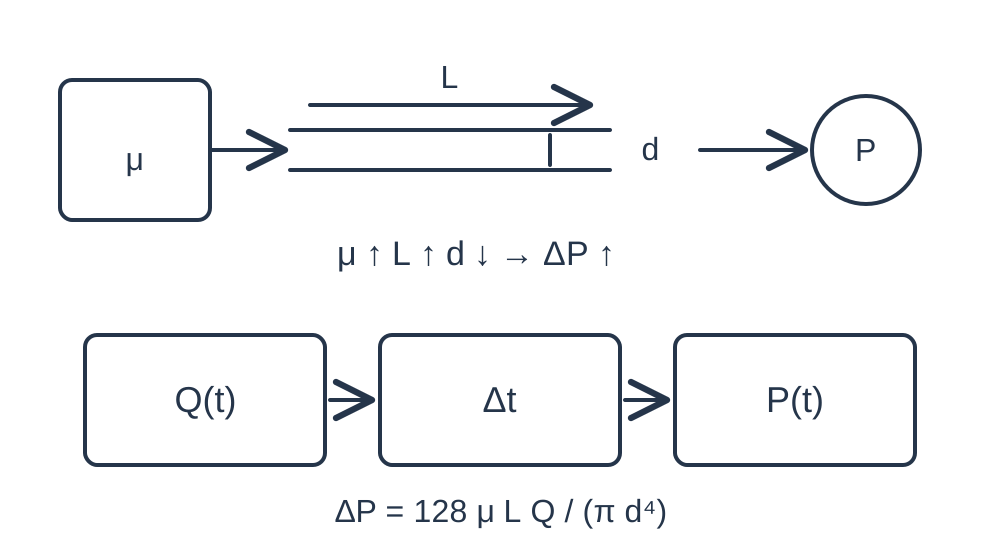
How Should Piston Pump Aspiration Speed and Dwell Be Set for Viscous Reagents?
A stable aspiration window depends on resistance, filling time and pressure. Test aspiration speed and the subsequent dwell independently, then select a faster combination that satisfies bias, repeatability, bubbles and cycle-time requirements. Water settings do not automatically transfer to the reagent, and completed motion does not prove fluid equilibration.
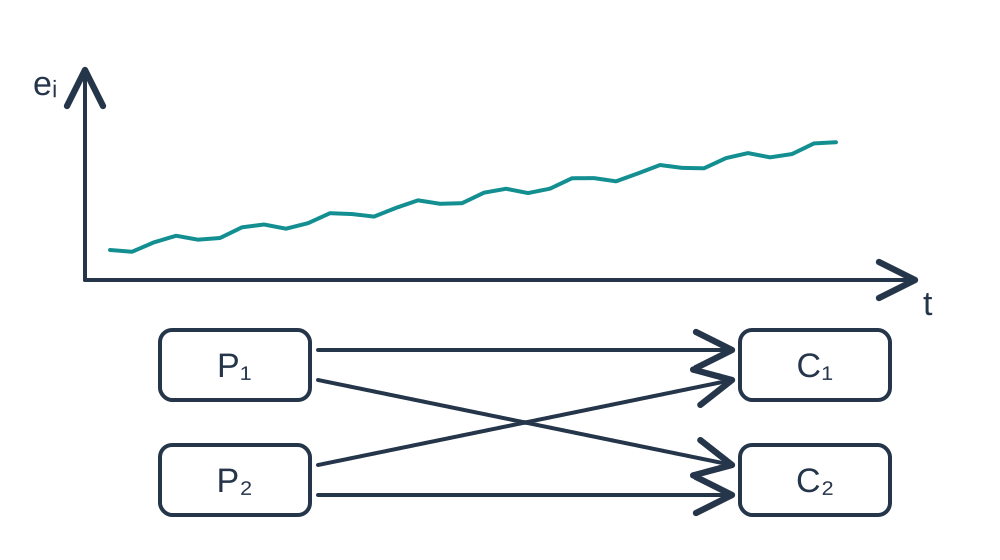
How Can You Isolate Piston Pump Dispensing Drift Over Time?
A volume trend shows that system conditions are changing; it does not identify pump wear. Save every dispense with temperature, level, reversal and priming events, then isolate causes using controlled priming, fixed level and pump/valve/circuit swaps. Review mean bias separately from CV before concluding that mechanical parts or seals have degraded.
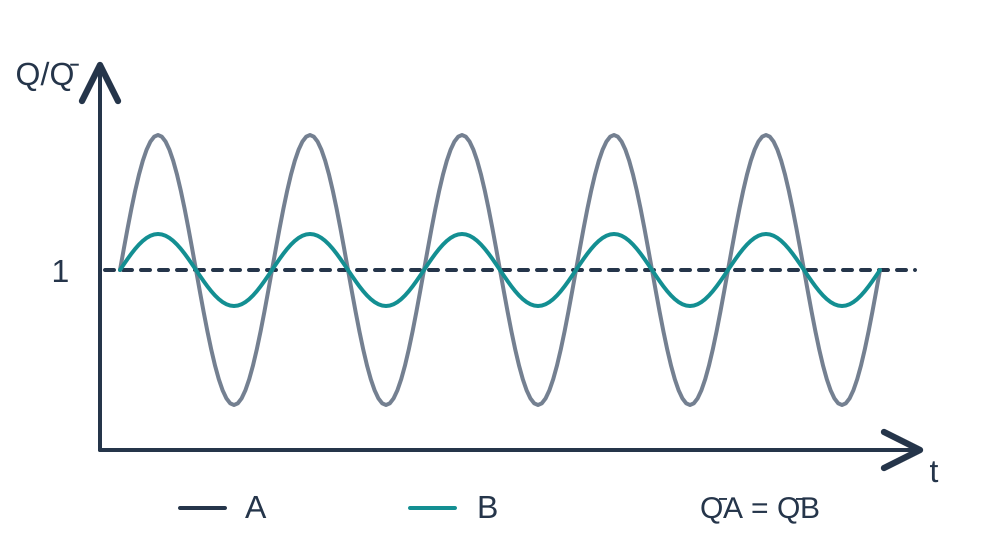
Does a Miniature Diaphragm Pump Need a Pulsation Damper? Validate It with an A/B Test
A damper is justified by load performance and its trade-offs in startup, trailing liquid, cleaning and dead volume. Define acceptable ripple at the load, then compare steady operation and start-stop delivery with and without damping under the same task. A smoother trace alone is not a passing result.
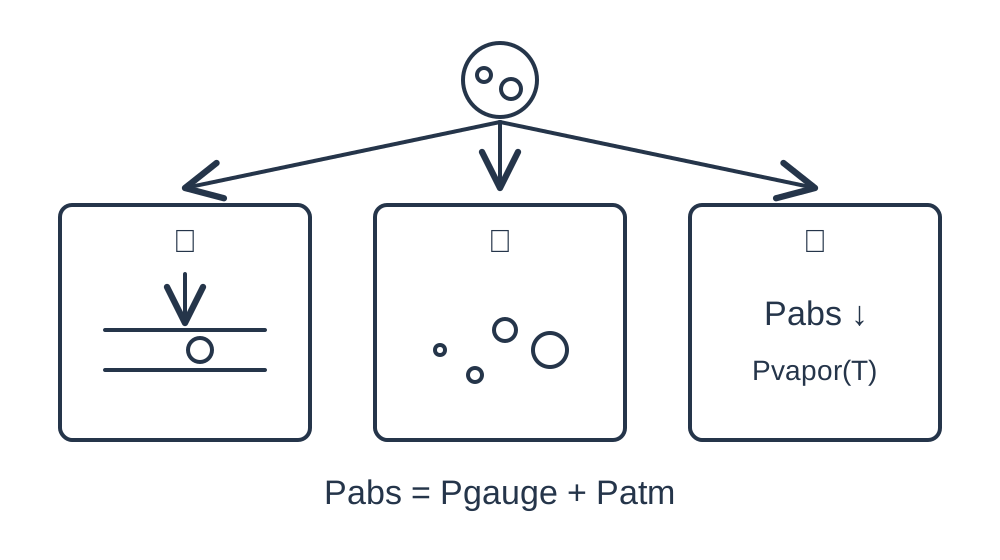
Diaphragm Pump Bubbles and Noise: Cavitation, Air Ingress or Outgassing?
Bubbles, noise and reduced flow do not individually prove cavitation. Separate incoming air, dissolved-gas release and local vapor formation using synchronized absolute inlet pressure, fluid temperature, bubble location and flow. A normal average inlet pressure cannot exclude a brief low-pressure region inside the pump; build evidence through controlled comparisons.
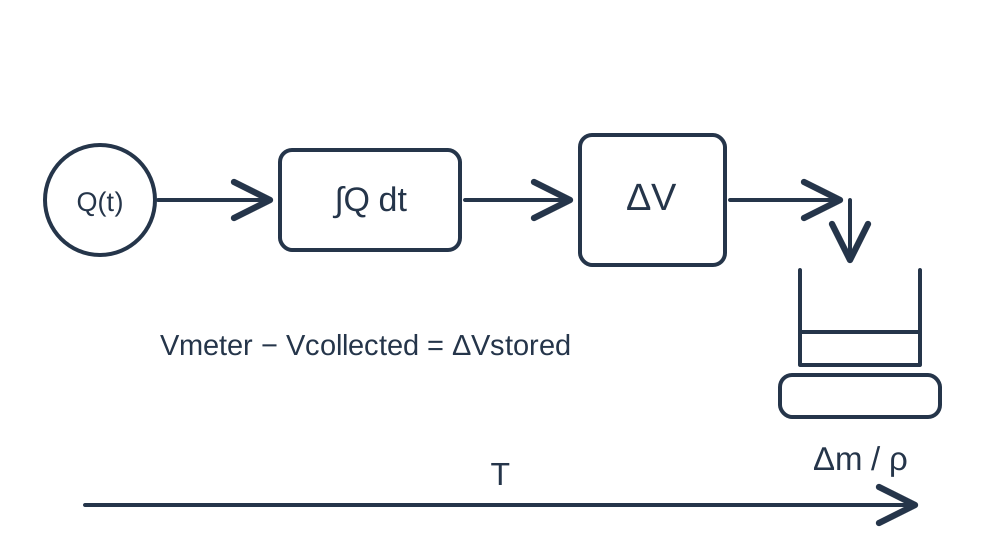
Why Does a Diaphragm Pump Flow Totalizer Disagree with Collected Mass?
A fluctuating display and an incorrect total are different problems. Match collection windows and hydraulic conditions, convert mass using the real fluid density, then check storage changes, trailing liquid, reverse flow, range and sampling. Only an independent reference can establish whether filtering or damping improves measurement accuracy.
Need technical support for product selection?
Share your media, pressure range, tubing size, application conditions or drawings with Foreach for product matching and technical confirmation.