
Sampling probes are primarily made to drawings for the customer’s instrument. This page shows typical uses and design options; OD, ID, length, tip and mounting must be confirmed against drawings.
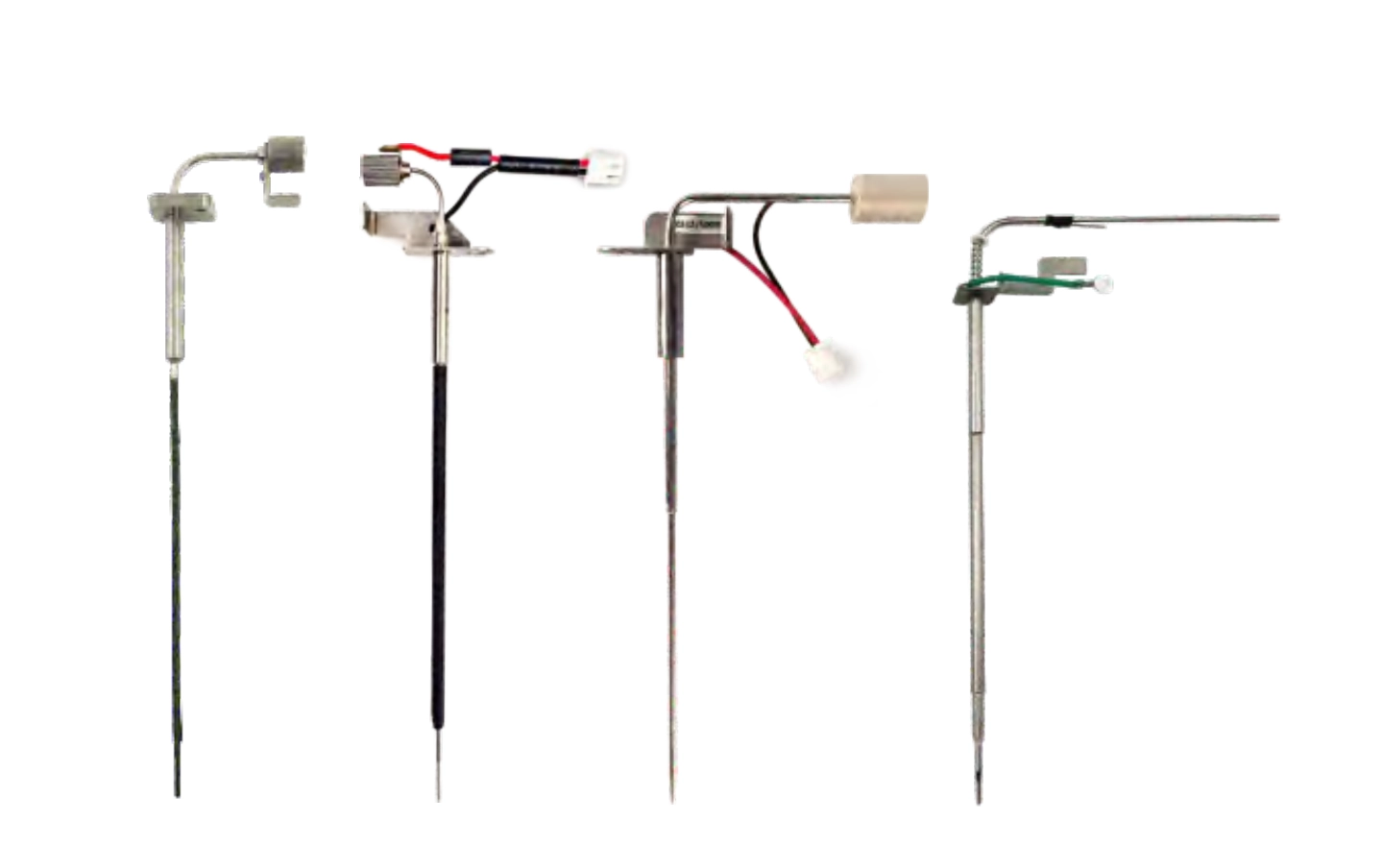
Custom Sampling Probes for Samples and Reagents
FOREACH custom sampling probes for samples and reagents support aspiration, dispensing and measured liquid transfer in automated analyzers. Designs are matched to the instrument layout, container geometry, liquid volume and motion sequence, rather than selected by tube dimensions alone.
Specify probe ID/OD, overall and working length, pointed, flat or V-shaped tips, side ports, bends and mounting ends. Capacitive liquid-level detection compatibility can be reviewed with the probe structure, cable connection and instrument-level detection scheme.
Internal polishing, external coatings and surface treatments are evaluated against the fluid and cleaning process. Provide drawings or samples, aspiration/dispense rates, target volumes and residue requirements to define the geometry, manufacturing process and acceptance criteria. Validate carryover performance in the actual workflow.
Typical Applications:
Reagent aspiration, Sample aspiration, Liquid dispensing, Metered liquid transfer, cLLD integration, Low-residue fluid paths
Customization requirements
Share the fluid, interfaces, available installation space and operating requirements so we can help define a suitable custom solution.
Product information
For aspirating, dispensing and metered transfer of reagents or samples. Define the liquid, target volume and container before selecting the probe body, tip and mounting geometry.
Sharp, blunt, V-shaped, side-port and bent designs are selected for the project. Internal polishing, external coatings and capacitive liquid level detection compatibility are confirmed separately.
Customization checklist
| Item to confirm | Details to check |
|---|---|
| Drawings or samples | Provide 2D drawings, 3D files, physical samples or photos of the instrument’s installation space. |
| Aspiration geometry | Confirm OD, ID, overall and working length, bend direction and mounting-end geometry. |
| Tip and port geometry | Confirm sharp, blunt or V-shaped openings, side-port position and diameter, and liquid-entry/discharge direction. |
| Low-residue processing | Evaluate internal polishing, external coatings and droplet-reduction treatments against the liquid, target volume and wash method. |
| Liquid level detection compatibility | For cLLD / capacitive liquid level detection, confirm probe geometry, cable connections and the instrument’s sensing system. |
| Operating conditions | Specify liquid type, aspiration rate, dispense volume, wash method and cross-contamination requirements. |
This page outlines customization options and the details to confirm. Materials, dimensions, tolerances, surface treatments and operating conditions are governed by the agreed drawings, samples and inspection requirements.
Drawings and supporting documents
- Design drawings or samples
- Show the mounting datum, overall length, effective projection, ID and OD, bend direction, and the tip or side-port position relative to the container bottom. Provide 2D drawings, 3D files or physical samples. If the information is incomplete, start with the installation space and a description of the task.
- Operating and acceptance requirements
- Specify the actual fluids, wash procedure, instrument motions and acceptance method. Confirming dimensions and validating operation in the instrument are separate checks.
- Design revision and delivery documents
- Drawings, inspection requirements and accompanying documents are agreed for each project. Dimensions, labels or accessories shown in example photos do not define the supply scope for every version.
Frequently Asked Questions
Need a custom sampling probe?
Provide OD, ID, length, tip geometry, side-port requirements, installation space, liquid type and level-detection needs. FOREACH can help define your custom sampling probe.