
Blade shape, diameter, length and mounting depend on vessel dimensions, liquid volume and mixing space. A single standard model cannot define the choice.
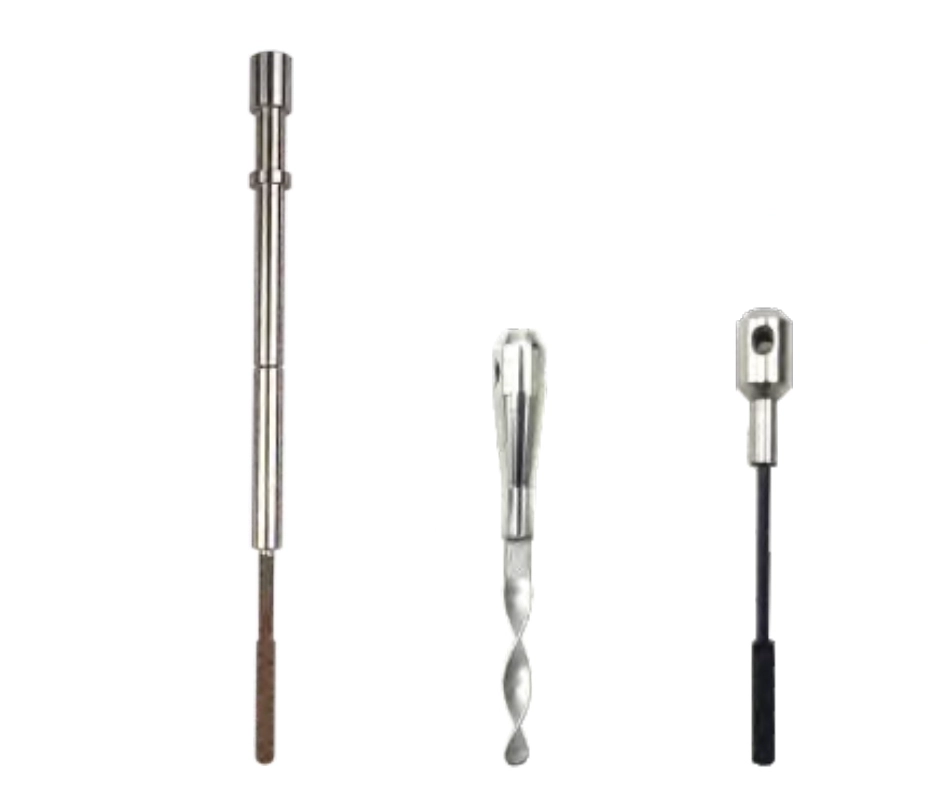
Custom Mixing Paddles for Reaction Vessels
FOREACH custom mixing paddles mix samples, reagents, diluents and reaction fluids in automated analyzers. Paddle geometry is developed for the reaction vessel, target liquid volume and drive arrangement as an instrument component.
Options include flat, helical and 90-degree-angle paddle geometries. Define paddle dimensions, working position, concentricity and mounting ends around the vessel bottom, liquid level, speed range and available motion space.
Materials, welding and coatings are reviewed for fluid compatibility, cleaning and strength. Provide vessel drawings, mixing time and bubble or splash requirements. Evaluate mixing performance and residue after cleaning using the actual fluid and vessel.
Typical Applications:
Sample mixing, Reagent mixing, Reaction-liquid mixing, In-vessel mixing, Coatings to reduce droplet retention, Automated analyzers
Customization requirements
Share the fluid, interfaces, available installation space and operating requirements so we can help define a suitable custom solution.
Product information
For mixing samples, reagents, diluents or reaction liquids. Define the reaction vessel, liquid volume and mixing target before selecting the paddle, mounting geometry and motion conditions.
Flat, spiral or 90-degree angled blades are evaluated for the actual mixing task. Surface coating, welding, coaxiality and mounting features are confirmed separately.
Customization checklist
| Item to confirm | Details to check |
|---|---|
| Drawings or samples | Provide vessel geometry, mixing space, mounting dimensions, existing samples or mixing-test requirements. |
| Reaction vessel | Confirm vessel dimensions, bottom shape, liquid level, available mixing space and motion-interference risk. |
| Blade geometry | Choose flat, spiral, 90-degree angled or other blades according to mixing results and liquid conditions. |
| Mixing conditions | Specify target volume, speed range, mixing time and whether bubbles, splashing or sediment residue are permitted. |
| Mounting design | Confirm mounting-end geometry, coaxiality requirements, connection, motion direction and drive arrangement. |
| Surface treatment | Confirm coatings, color, welding method, droplet-retention requirements and washing against the fluid and required service life. |
This page outlines customization options and the details to confirm. Materials, dimensions, tolerances, surface treatments and operating conditions are governed by the agreed drawings, samples and inspection requirements.
Drawings and supporting documents
- Design drawings or samples
- Show the vessel opening, inner wall and bottom geometry, liquid-level range, paddle dimensions, immersion depth, mounting end and rotational envelope. Provide 2D drawings, 3D files or physical samples. If the information is incomplete, start with the installation space and a description of the task.
- Operating and acceptance requirements
- Specify the actual fluids, wash procedure, instrument motions and acceptance method. Confirming dimensions and validating operation in the instrument are separate checks.
- Design revision and delivery documents
- Drawings, inspection requirements and accompanying documents are agreed for each project. Dimensions, labels or accessories shown in example photos do not define the supply scope for every version.
Frequently Asked Questions
Need to define paddle geometry and mixing performance?
Provide vessel dimensions, target volume, speed range, mixing time, blade geometry, mounting end and coating needs. FOREACH can help define the custom paddle.