
Foreach TechnologyForeach Technology
Home
Products
Applications
About Us
Contact & Partnership
简体中文EnglishEspañolFrançais한국어Русский
Home
Products
Pump SeriesValve SeriesTubing SeriesFitting SeriesProbe SeriesSmart Control Series
Applications
IVD DiagnosticsLife SciencesLaboratory AutomationAnalytical InstrumentsEnvironmental MonitoringSynthetic Biology
Resources
DatasheetsFluid Resistance CalculatorFitting ReplacementInstallation GuidesMaterial CompatibilityTechnical ArticlesCompany News
About Us
About ForeachR&D and ManufacturingQuality System and QualificationsMilestonesForeach Culture
Contact & Partnership
Contact UsBecome a Distributor
  • Pump Series
  • Valve Series
  • Probe Series
  • Fitting Series
  • Tubing Series
  • Control Series
  • IVD
  • Life Science
  • Lab Automation
  • Analytical Instruments
  • Environmental Monitoring
  • Synthetic Biology
  • Datasheets
  • Fluid Resistance Calculator
  • Fitting Replacement
  • Installation Guides
  • Material Compatibility
  • Technical Articles
  • Company News
  • About Foreach
  • R&D & Manufacturing
  • Quality & Compliance
  • History
  • Foreach Culture
  • Inquiry Form
  • Contact Information

Shenzhen Foreach Technology Co., Ltd.

Address: 13th Floor, 2nd Building, Yufengda Industrial Park, 1008th Guang Qiao Boulevard, Guangming District, Shenzhen 518132 CHINAView Map

Email: sales@foreachtek.com

Tel: +86 755 8655 3831

LinkedInYouTubeFacebookInstagramX

© 2026 Shenzhen Foreach Technology Co., Ltd. All rights reserved.

Privacy Policy·

Home/Product Center/Miniature Diaphragm Pumps/DPGL800.
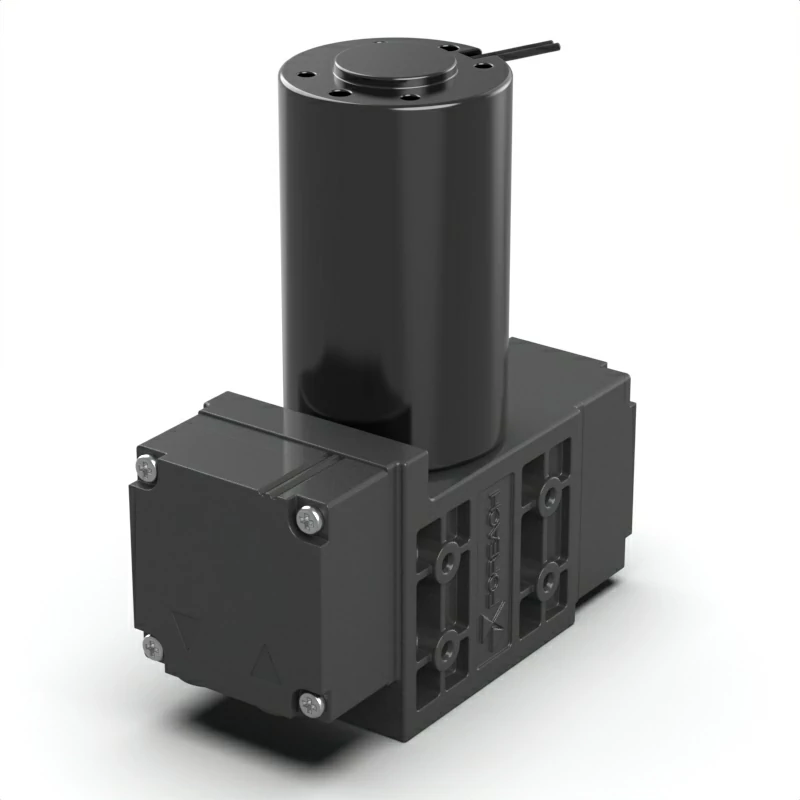
DPGL800 Series Brushless Miniature Gas-Liquid Diaphragm Pump

DPGL800 Series Brushless Miniature Gas-Liquid Diaphragm Pump

The Foreach DPGL800 Series Brushless Miniature Gas-Liquid Diaphragm Pump is designed for gas and gas-liquid mixtures. It is not suitable for pumping 100% liquid. It has a single-head no-load gas flow rate of 6 L/min, a maximum positive pressure of +30 kPa, a maximum negative pressure of < -90 kPa, a 24 V brushless motor, and a service life of 10000 h. It is suitable for gas-liquid waste extraction, gas-liquid mixture transfer, line evacuation, and automated equipment requiring strong suction performance. Actual performance may vary with the medium state, tubing configuration, and operating load. Refer to the specification table below for detailed parameters.

Typical Applications:

Gas suction, vacuum generation, gas-liquid waste extraction, gas-liquid mixture transfer, line evacuation

Model:This product is custom-made
Product TypeMiniature Gas-Liquid Diaphragm Pump
Motor TypeBrushless DC Motor
Rated VoltageDC 24V ±10%
Rated Power≤17 W
Free-Flow Rate (Single Head)6 L/min
Maximum Positive Pressure30 kPa
Maximum Negative Pressure<-90 kPa
Working MediumGas, gas-liquid mixture
Fluid Temperature+5 °C–+40 °C
InterfaceG1/8 (female thread)
Weight600 g
Service Life10,000 h
Pump Head MaterialPP S
Diaphragm MaterialEPDM / PTFE
Valve MaterialEPDM / FFKM
Preview DrawingView the technical drawing for DPGL800 Series Brushless Miniature Gas-Liquid Diaphragm Pump.
Download DPGL800 PDF
Preview DPGL800 Datasheet

Frequently Asked Questions

Yes. In evacuation and vacuum aspiration applications, the DPGL800 can serve as a miniature diaphragm vacuum pump for gas aspiration, tubing evacuation, and vacuum generation. Select it according to the target vacuum level, system volume, and allowable evacuation time, and confirm compatibility between the actual medium and wetted materials.

6 L/min is the no-load, free-air flow per DPGL800 pump head. It is not a waste-liquid discharge rate, nor does it mean the same gas flow is available at the target vacuum level. Actual aspiration capacity for air-containing waste liquid depends on the gas-liquid condition, inlet conditions, line resistance, and outlet load, and must be verified in the actual fluid circuit.

Yes. Its specified media are gases and gas-liquid mixtures, making it suitable for aspiration where air and liquid enter together or intermittently. Continuous transfer of 100% liquid is outside its intended operating conditions; select a miniature liquid diaphragm pump for that duty. The waste liquid's chemical composition, concentration, and temperature must also be compatible with the wetted materials.

No. Below −90 kPa is the pump's ultimate negative-pressure specification, not a guarantee of the vacuum achievable in every system. Leaks, continuous gas ingress, line resistance, gas-liquid conditions, and outlet conditions affect the result. Verify the achievable vacuum at the equipment's measurement point under actual operating conditions.

First define the effective system volume, initial pressure, target vacuum level, and allowable evacuation time. Then assess the gas flow–pressure and vessel pressure build-up time curves, accounting for line resistance, leaks, and gas-liquid conditions. Dividing system volume by 6 L/min does not give the actual evacuation time; confirm performance by testing the complete system.

Provide the medium's composition, concentration, temperature, and gas-liquid condition, such as continuous air entrainment or intermittent liquid slugs; effective system volume, initial pressure, target vacuum, and allowable evacuation time; waste-liquid volume per cycle and cycle timing; tubing internal diameter, length, elevation difference, and outlet conditions; continuous operating time, supply voltage, installation space, and wetted-material requirements. Include any known gas-liquid ratio, leakage, or continuous gas ingress.

Related Videos

Related Technical Articles

Foreach miniature diaphragm pumps for OEM integration: operating points, instrument validation and production introduction

Whether the miniature diaphragm pump can work stably in OEM instruments depends on the joint matching of fluid path tasks, inlet and outlet conditions, material combinations, control methods and overall machine structure. Taking Foreach DPL30, DPL60, DPL30H and DPGL800 as examples, this article starts from the flow and pressure budget, gas-liquid status, wetted materials and electrical interfaces to explain how to establish candidate solutions, carry out reproducible prototype verification, and convert the verification results into technical requirements for production supply.

2026-09-11View Details

Which Materials Are Available for Miniature Diaphragm Pumps? Selection Considerations

Compare pump-head, diaphragm and valve materials, then check fluid composition, concentration, temperature, exposure time and cleaning conditions before selecting a configuration.

2026-09-07View Details

How to Select an IVD Waste Liquid Pump: Liquid or Gas-Liquid Diaphragm Pump?

Do not select an IVD waste pump from mL/min alone. If the line remains liquid-filled and transfers waste continuously, evaluate a liquid diaphragm pump. If the aspiration needle ingests air and the inlet alternates between liquid and gas, evaluate a gas-liquid diaphragm pump together with vacuum, system volume and evacuation time.

2026-09-03View Details

What Are Cleaning, Wash and Rinse Pumps in IVD Systems, and Why Are Miniature Diaphragm Pumps Used?

Cleaning pump, wash pump and rinse pump usually name different duties within an IVD cleaning sequence, not three fixed pump mechanisms. Selection starts with wash volume, cycle rate, line resistance, wetted materials, and whether the duty is liquid supply or waste aspiration.

2026-09-03View Details

IVD Waste Aspiration: Liquid Pump or Vacuum Pump? Direct vs Indirect Aspiration

Probe washing, reaction-cup cleaning, and routine waste removal in IVD instruments are all described as “waste aspiration.” Yet whether waste passes directly through a liquid pump or first enters a collection bottle while a vacuum pump creates negative pressure leads to entirely different selection logic.

2026-08-09View Details

What to Do When a Laboratory Waste Aspiration Pump Loses Suction: Troubleshooting Leaks, Filter Blockage, and Liquid Carryover

A laboratory waste aspiration pump is normally installed downstream of the collection bottle, overflow protection, and hydrophobic filter. It creates vacuum by removing gas from the bottle. When suction declines, first distinguish a change in the pump itself from a leak, blocked filter, activated overflow protection, clogged tip, or liquid carryover.

2026-08-06View Details

How to Select a Gas-Liquid Diaphragm Pump: DPGL800 Flow, Vacuum and Build-Up Time

DPGL800 is intended for gas and gas-liquid mixtures. Typical duties include aspirating waste liquid with entrained air, evacuating tubing, creating vacuum and continuing to draw when liquid arrives intermittently.

2026-07-16View Details

2-Wire vs 5-Wire Brushless Diaphragm Pumps: What Is the Difference and Which Should You Choose?

When selecting a miniature diaphragm pump, two lead configurations may be offered for the same type of DC brushless motor: 2-wire and 5-wire. The main difference is not the pump's basic delivery principle, but how much control and operating-status information the equipment requires from the motor.

2026-07-22View Details

Need help selecting a diaphragm pump?

Share the fluid, flow rate, pressure, self-priming requirements, wetted materials, port type, and installation space. The Foreach engineering team can help confirm a suitable diaphragm pump configuration.

Contact an Engineer