
Foreach TechnologyForeach Technology
Home
Products
Applications
About Us
Contact & Partnership
简体中文EnglishEspañolFrançais한국어Русский
Home
Products
Pump SeriesValve SeriesTubing SeriesFitting SeriesProbe SeriesSmart Control Series
Applications
IVD DiagnosticsLife SciencesLaboratory AutomationAnalytical InstrumentsEnvironmental MonitoringSynthetic Biology
Resources
DatasheetsFluid Resistance CalculatorFitting ReplacementInstallation GuidesMaterial CompatibilityTechnical ArticlesCompany News
About Us
About ForeachR&D and ManufacturingQuality System and QualificationsMilestonesForeach Culture
Contact & Partnership
Contact UsBecome a Distributor
  • Pump Series
  • Valve Series
  • Probe Series
  • Fitting Series
  • Tubing Series
  • Control Series
  • IVD
  • Life Science
  • Lab Automation
  • Analytical Instruments
  • Environmental Monitoring
  • Synthetic Biology
  • Datasheets
  • Fluid Resistance Calculator
  • Fitting Replacement
  • Installation Guides
  • Material Compatibility
  • Technical Articles
  • Company News
  • About Foreach
  • R&D & Manufacturing
  • Quality & Compliance
  • History
  • Foreach Culture
  • Inquiry Form
  • Contact Information

Shenzhen Foreach Technology Co., Ltd.

Address: 13th Floor, 2nd Building, Yufengda Industrial Park, 1008th Guang Qiao Boulevard, Guangming District, Shenzhen 518132 CHINAView Map

Email: sales@foreachtek.com

Tel: +86 755 8655 3831

LinkedInYouTubeFacebookInstagramX

© 2026 Shenzhen Foreach Technology Co., Ltd. All rights reserved.

Privacy Policy·

Home/Product Center/Miniature Diaphragm Pumps/DPL30-DB
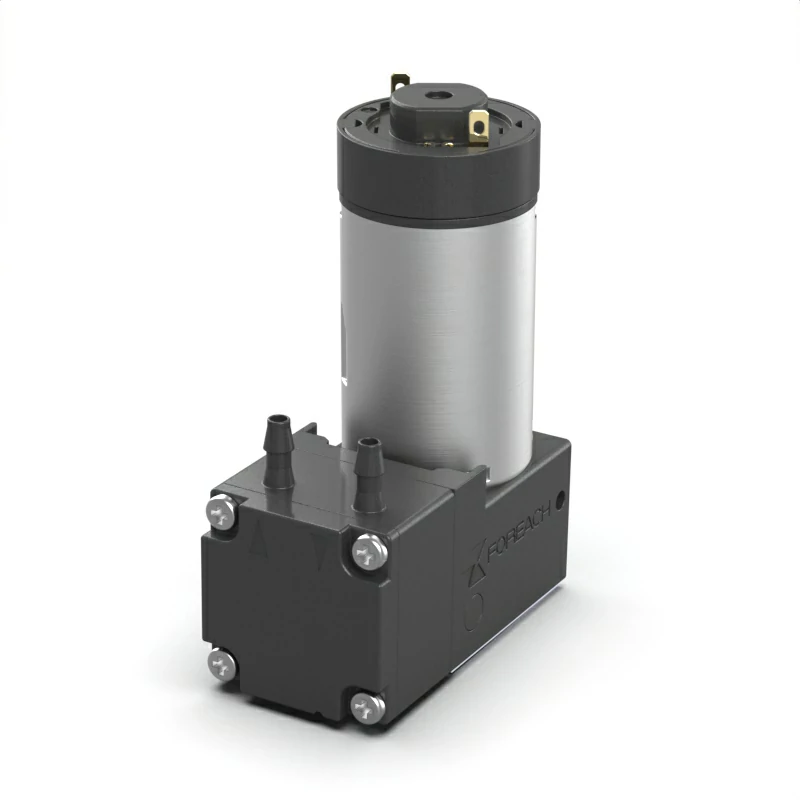
Foreach DPL30-DB 300 mL/min Brushed DC Miniature Liquid Diaphragm Pump, 3,000 h Service Life, 12 V / 24 V

Foreach DPL30-DB 300 mL/min Brushed DC Miniature Liquid Diaphragm Pump, 3,000 h Service Life, 12 V / 24 V

The Foreach DPL30 Series Brushed Miniature Liquid Diaphragm Pump is designed for liquid transfer, with a no-load flow rate of 300 mL/min, a pressure rating of 100 kPa, a brushed motor, and a service life of 3000 h. It is suitable for cleaning-solution transfer, reagent transfer, waste-liquid discharge, line priming, and liquid circulation, and can be selected for IVD, life science, laboratory automation, and analytical instrument applications. Actual flow may vary with the medium, operating pressure, and tubing resistance. Refer to the specification table below for detailed parameters. The stated service-life value applies at rated voltage under continuous operation.

Typical Applications:

Cleaning-solution transfer, reagent transfer, waste-liquid discharge, line priming, liquid circulation

Model:This product is custom-made
Motor TypeBrushed DC Motor
Product TypeMiniature Liquid Diaphragm Pump
Rated VoltageDC 24V ±10% / DC 12V ±10%
Rated Power≤8 W
Free-Flow Rate300 mL/min
Rated Pressure100 kPa
Self-Priming Height6 mH₂O
Working MediumPurified water; other fluids require evaluation
Fluid Temperature+5 °C–+80 °C
Port SizeAccepts tubing with an ID of 3.2 mm
Noise≤80 dB
Operating Temperature+5 °C–+40 °C
Operating Relative Humidity30%–85% RH
Storage Temperature-10 °C–+40 °C
Storage Relative Humidity10%–90% RH
Pump Head MaterialPP S
Diaphragm MaterialEPDM / PTFE
Valve MaterialEPDM / FFKM
Service Life3,000 h

Typical Applications for a 300 mL/min Miniature Liquid Diaphragm Pump

A 300 mL/min miniature liquid diaphragm pump is commonly used for fluid withdrawal, drainage, washing, return flow and auxiliary refill functions inside compact instruments. The brushed version provides the same 300 mL/min flow class, 100 kPa pressure rating and 6 mH₂O self-priming specification as the brushless version, with a specified service life of 3,000 h. It is suited to equipment where the required duty cycle and service-life target fit the brushed-motor configuration.

The same pump technology may be described by its actual function in different systems, such as a waste liquid pump, wash solution pump, waste ink pump, ink return pump or small refill pump.

1. Waste Liquid Pump for IVD, Clinical Chemistry and Hematology Analyzers

In IVD, clinical chemistry and hematology analyzers, reaction waste, wash solution and residual sample fluid must be transferred from reaction vessels, probes or waste manifolds to a waste container. At this point in the fluid path, the pump is primarily a waste liquid pump rather than a metering pump.

Waste lines may contain both air and liquid, so the pump must be able to re-establish suction after standby, air entry or bottle replacement. A self-priming diaphragm pump is well suited to this duty. A 300 mL/min flow class can support periodic drainage in compact analyzers, while actual discharge rate still depends on suction height, tubing ID, valves and total system resistance.

2. Wash Solution Pump for Laboratory Automation

In automated liquid handling, sample preparation and laboratory analyzers, wash solution is transferred from a reservoir to probes, reaction vessels, flow cells or internal tubing to remove sample and reagent residues. This fluid path is focused on supplying, flushing and replacing liquid rather than high-accuracy volumetric dosing.

A micro liquid pump can supply wash solution, flush tubing and prime the fluid path after startup or bottle replacement. The 300 mL/min flow class provides a practical balance between washing speed and compact installation, while self-priming helps the system recover when the inlet line is not completely filled with liquid.

3. Waste Liquid and Rinse Pump for Water and Environmental Analyzers

Online water-quality, environmental and chemical analyzers often contain separate paths for sample, reagent, rinse solution and waste liquid. High-accuracy reagent dosing is normally handled by a metering pump, while waste removal, internal rinsing and general fluid transfer can be handled by a diaphragm liquid pump.

In a drainage path it functions as a waste liquid pump; in an internal cleaning path it functions as a rinse or wash solution pump. Acids, alkalis, oxidizing liquids and special reagents require compatibility checks based on concentration, temperature and contact time with the pump head, diaphragm and valves.

4. Waste Ink and Ink Return Pump for Inkjet Printers

Auxiliary ink circuits in inkjet printers may need to remove waste ink after printhead cleaning, recover excess ink or maintain return flow between the printhead and ink reservoir. A pump used to discharge cleaning residue is commonly described as a waste ink pump, while a pump returning excess ink to the reservoir may be used as an ink return or recirculation pump.

Diaphragm pumping is suitable for auxiliary ink paths where air and liquid may alternate, but ink and cleaning-fluid chemistries vary widely. Wetted-material compatibility, flow stability and service life must be validated before use. This application refers to auxiliary waste and return paths, not high-pressure printhead ink delivery.

5. Automatic Refill Pump for Compact Equipment

Compact instruments may use a small auxiliary pump to replenish wash liquid, coolant or another service fluid from a lower reservoir when the local tank level falls. Working with a level sensor or controller, a self-priming liquid pump can draw fluid from the reservoir and restore the required level without manual priming.

The 6 mH₂O self-priming specification is useful when the reservoir is below the pump, but actual refill performance still depends on fluid viscosity, suction-line length, filter resistance, discharge pressure and wetted-material compatibility.

Brushed vs Brushless Diaphragm Pump: Which Motor Version Should You Choose?

Brushed Motor

The brushed version uses mechanical brushes and a commutator for motor commutation. It is a mature and cost-effective configuration for instruments with a defined operating cycle. The specified service life of the brushed DPL30 version is 3,000 h, while actual life also depends on load, start-stop frequency, ambient temperature and the equipment duty cycle.

Long-term contact between the brushes and commutator produces wear particles inside the motor, and mechanical commutation can also generate arcing and transient electrical noise. For instruments with stricter requirements on maintenance intervals, internal cleanliness or EMC, the brushless version should also be evaluated. Brush wear occurs inside the motor and must not be described as direct contamination of the pumped liquid.

Brushless Motor

The brushless version uses electronic commutation and has no mechanical carbon brushes or brush-commutation arcing. The specified service life of the brushless DPL30 version is 10,000 h, making it more suitable for longer operating cycles, extended maintenance intervals or instruments with higher internal-cleanliness requirements.

Brushless does not mean zero electromagnetic interference. Electronic commutation and switching in the motor driver can still generate electrical noise. Final EMC performance should therefore be verified with the complete power supply, driver electronics, wiring, grounding, shielding and enclosure design.

Compare with the 300 mL/min Brushless Liquid Diaphragm Pump →

Application Selection Note

300 mL/min is a flow value measured under specified test conditions and is not a fixed output in every installed system. Suction height, tubing diameter and length, filters, solenoid valves, fittings and discharge back pressure all change system resistance and therefore the actual operating point. For the brushed version, also confirm that the equipment duty cycle and required service-life target are compatible with the specified 3,000 h motor-life condition.

Learn more: Operating point and selection of a 300 mL/min diaphragm pump →
Preview DrawingView the technical drawing for Foreach DPL30-DB 300 mL/min Brushed DC Miniature Liquid Diaphragm Pump, 3,000 h Service Life, 12 V / 24 V.
Download DPL30 PDF
Preview DPL30 Datasheet

Frequently Asked Questions

It can be used to transfer cleaning solutions, reagents, waste liquids, and other liquids in instrument fluid paths. Before use, confirm the compatibility of the liquid composition, concentration, and temperature with the diaphragm, valves, pump head, and other wetted materials.

The no-load flow rate is 300 mL/min and the pressure rating is 100 kPa. Actual flow may be affected by liquid viscosity, tubing length, tubing diameter, operating pressure, and fluid-path resistance.

It can be selected for cleaning, reagent transfer, waste-liquid discharge, and liquid-circulation functions in IVD, life science, laboratory automation, and analytical instruments.

The brushed version has a service life of 3000 h and is suitable for equipment that requires basic transfer performance and cost control, with relatively limited continuous operating time.

Provide the liquid medium, target flow rate, operating pressure, suction lift, operating time, supply voltage, tubing size, wetted-material requirements, and installation space.

Related Videos

View more

Related Technical Articles

Does a Miniature Diaphragm Pump Need a Pulsation Damper? Validate It with an A/B Test

A damper is justified by load performance and its trade-offs in startup, trailing liquid, cleaning and dead volume. Define acceptable ripple at the load, then compare steady operation and start-stop delivery with and without damping under the same task. A smoother trace alone is not a passing result.

2026-09-10View Details

Diaphragm Pump Bubbles and Noise: Cavitation, Air Ingress or Outgassing?

Bubbles, noise and reduced flow do not individually prove cavitation. Separate incoming air, dissolved-gas release and local vapor formation using synchronized absolute inlet pressure, fluid temperature, bubble location and flow. A normal average inlet pressure cannot exclude a brief low-pressure region inside the pump; build evidence through controlled comparisons.

2026-09-10View Details

Why Does a Diaphragm Pump Flow Totalizer Disagree with Collected Mass?

A fluctuating display and an incorrect total are different problems. Match collection windows and hydraulic conditions, convert mass using the real fluid density, then check storage changes, trailing liquid, reverse flow, range and sampling. Only an independent reference can establish whether filtering or damping improves measurement accuracy.

2026-09-10View Details

Foreach miniature diaphragm pumps for OEM integration: operating points, instrument validation and production introduction

Whether the miniature diaphragm pump can work stably in OEM instruments depends on the joint matching of fluid path tasks, inlet and outlet conditions, material combinations, control methods and overall machine structure. Taking Foreach DPL30, DPL60, DPL30H and DPGL800 as examples, this article starts from the flow and pressure budget, gas-liquid status, wetted materials and electrical interfaces to explain how to establish candidate solutions, carry out reproducible prototype verification, and convert the verification results into technical requirements for production supply.

2026-09-11View Details

Selecting a Self-Priming Miniature Liquid Diaphragm Pump: Lift, Priming Time and Dry or Wet Starts

Select a self-priming miniature liquid diaphragm pump by checking suction lift, time to first liquid, dry and wet starting conditions, and stable delivery. Use DPL30, DPL60 and DPL30H specifications to define an instrument-level test.

2026-09-07View Details

Reducing Flow Pulsation in Miniature Diaphragm Pumps: Measurement and Practical Measures

Diagnose miniature diaphragm pump flow pulsation by separating real fluctuations from measurement errors. Compare damping, tubing and speed-control measures using matched operating conditions and endpoint measurements.

2026-09-07View Details

Why do multiple wash nozzles deliver different flows from one miniature diaphragm pump?

Calculate demand from the volume and timing of each wash nozzle, separate insufficient pump output from unequal distribution, and verify each branch with collection and pressure measurements.

2026-09-08View Details

Miniature Diaphragm Pump Noise: Causes, Vibration Isolation and Noise Reduction

Investigate miniature diaphragm pump noise at a matched operating point. Check the motor, pump head, supports, tubing and enclosure, then validate noise-reduction measures against flow, temperature rise and reliability.

2026-09-07View Details

Flow starts normally, then falls: how do you check reservoir venting for a miniature diaphragm pump?

Record reservoir headspace pressure, pump inlet pressure and delivery together to investigate restricted venting and distinguish liquid-level changes, blockage, air leaks and outlet backpressure.

2026-09-08View Details

Miniature Diaphragm Pump Backflow After Stopping: Check Valves and Anti-Siphon Design

Diagnose reverse flow after a miniature diaphragm pump stops, distinguish it from forward siphoning and residual dripping, and evaluate check-valve behavior, valve sequencing and static sealing in the complete circuit.

2026-09-07View Details

Which Materials Are Available for Miniature Diaphragm Pumps? Selection Considerations

Compare pump-head, diaphragm and valve materials, then check fluid composition, concentration, temperature, exposure time and cleaning conditions before selecting a configuration.

2026-09-07View Details

What Is the Difference Between an Ink Circulation Pump, Ink Supply Pump and Ink Return Pump?

Ink supply pump, ink return pump and ink circulation pump are fluidic functions, not three fixed mechanical pump types. A supply pump moves ink toward a sub-tank or printhead, a return pump moves unused ink back toward a reservoir, and a circulation pump maintains flow around a loop. Whether those functions need one, two or several pumps depends on the printhead, reservoirs, gravity or vacuum control, filters and supply-return architecture.

2026-09-03View Details

300 or 600 mL/min? How to Select an Ink Circulation or Ink Return Pump

Define the target working flow in the ink circulation or return circuit, then calculate or measure system differential pressure at that flow. The DPL30 300 mL/min and DPL60 600 mL/min values are no-load flow classes, not guaranteed flow after adding ink, filters, tubing and a printhead. The closer the target is to the nominal limit, the more important curve and installed testing become.

2026-09-03View Details

Why Is White Ink Recirculation More Difficult, and How Should a White Ink Circulation Pump Be Selected?

White ink normally uses high-refractive-index, high-specific-gravity pigment for opacity. TiO₂ is common, but density difference, dispersion, agglomeration and idle time affect settling. The objective is not simply a larger pump flow. The reservoir, tubing, filter and printhead region need controlled flow that reaches critical dead zones while respecting printhead pressure, ink condition and material compatibility.

2026-09-03View Details

How to Select an IVD Waste Liquid Pump: Liquid or Gas-Liquid Diaphragm Pump?

Do not select an IVD waste pump from mL/min alone. If the line remains liquid-filled and transfers waste continuously, evaluate a liquid diaphragm pump. If the aspiration needle ingests air and the inlet alternates between liquid and gas, evaluate a gas-liquid diaphragm pump together with vacuum, system volume and evacuation time.

2026-09-03View Details

What Are Cleaning, Wash and Rinse Pumps in IVD Systems, and Why Are Miniature Diaphragm Pumps Used?

Cleaning pump, wash pump and rinse pump usually name different duties within an IVD cleaning sequence, not three fixed pump mechanisms. Selection starts with wash volume, cycle rate, line resistance, wetted materials, and whether the duty is liquid supply or waste aspiration.

2026-09-03View Details

Why Does a 300 mL/min Micro Liquid Diaphragm Pump Lose Self-Priming Performance Over Time?

A loss of self-priming means that the pump and suction path can no longer create and retain the same low inlet absolute pressure as they did initially. Check-valve leakage, inlet air leaks, higher suction losses, fluid vapor pressure and material changes can produce the same symptom, so motor rotation alone cannot identify the cause.

2026-09-02View Details

A 300 mL/min Micro Liquid Diaphragm Pump Motor Runs but No Liquid Flows—What Should You Check First?

Motor rotation confirms drive activity, not effective chamber filling, check-valve rectification or an acceptable discharge load. The fastest diagnosis combines inlet pressure, outlet pressure, flow and motor current instead of relying on sound alone.

2026-09-01View Details

Why Does a 300 mL/min Micro Liquid Diaphragm Pump Lose Flow and Self-Priming When Water Is Replaced by a Reagent?

Passing a water test proves performance only at that water temperature, tubing, liquid level, power supply and test duration. A process reagent can change viscosity, density, vapor pressure, surface tension, wetting, outgassing and material condition, moving the operating point of the same pump.

2026-08-31View Details

How Should You Select EPDM, PTFE and FFKM for a 300 mL/min Micro Liquid Diaphragm Pump?

EPDM, PTFE and FFKM are not a simple low-to-high material ranking. EPDM and FFKM are elastomers, while PTFE is a fluoropolymer; the diaphragm, valves and pump head perform different mechanical jobs. Selection therefore applies to a complete wetted and dynamically loaded structure, not one material name.

2026-08-30View Details

How Do You Choose Between a 300 mL/min and 600 mL/min Miniature Diaphragm Pump? Calculate Task Flow First, Then Check the Actual Operating Point

The 300 mL/min and 600 mL/min values are flow classes first, not fixed outputs after installation in an instrument. Selection should begin by converting the liquid-handling task into a minimum average flow rate, then determining the differential pressure required by the actual fluid path, and finally confirming the operating point on the pump curve and in prototype testing.

2026-08-30View Details

How Much Installed Flow Margin Should a 300 mL/min Miniature Diaphragm Pump Have? A Foreach Example

Flow margin is not found by multiplying the target flow by 1.2 or 1.3 in every case. It is determined by comparing the pump's conservative available flow with the instrument's maximum demand within the same credible worst-case scenario. Testing must also define in advance how measurement uncertainty will be handled and what explicit acceptance criteria will apply.

2026-08-27View Details

Why Does Actual Flow Change So Much When the Tubing Size Changes on the Same Miniature Diaphragm Pump?

Even when the pump is unchanged, installed flow can change because of tubing inner diameter, length, bends, and the minimum bore of fittings. When flow falls after a tubing change, the effective response is neither to blame the pump first nor to enlarge every tube indiscriminately. Measure inlet pressure, outlet pressure, and accumulated flow together to determine where the added restriction actually occurs.

2026-08-24View Details

Which Has a Greater Effect on a Miniature Diaphragm Pump: Suction-Line or Discharge-Line Resistance?

Pressure loss on either the suction or discharge side increases the differential pressure carried by a miniature diaphragm pump, but there is no universal rule that one side is always more important. The suction side more readily affects initial priming, chamber filling, sensitivity to air leakage, outgassing, and cavitation. The discharge side more often appears as increased backpressure, reduced flow, and deadheading. Diagnose the system by observing inlet absolute pressure, outlet pressure, and flow on the same time axis.

2026-08-21View Details

What Is the Difference Between Rated Working Pressure, Maximum Output Pressure, Proof Pressure, and Burst Pressure for a Miniature Diaphragm Pump?

A pressure value has engineering meaning only when it is paired with a term definition, test fluid, inlet condition, corresponding flow rate, duration, and acceptance criteria. Rated working pressure can define an operating boundary; maximum output pressure, proof-test pressure, and burst pressure cannot be treated directly as continuous operating points.

2026-08-18View Details

Is 100 kPa Enough? How to Determine Whether a Fluid Path Needs a 600 kPa High-Pressure Miniature Diaphragm Pump

100 kPa and 600 kPa are not simply a standard version and an upgraded version. First complete a pressure budget for the entire fluid path at the target flow, then read the candidate pump curve. A higher pressure rating has value only when the application truly has high backpressure.

2026-08-15View Details

Why Do Brushed Diaphragm Pumps Last Around 3,000 Hours and Brushless Pumps Around 10,000 Hours?

Brushed miniature diaphragm pumps commonly have a reference life of approximately 3,000 hours; brushless versions are often rated around 10,000 hours. The difference reflects commutation, dominant wear mechanisms and the actual duty profile rather than a simple motor-quality ranking.

2026-08-03View Details

How to Read a Diaphragm Pump Flow-Pressure Curve—and Predict Installed Flow

A catalogue value such as 300 or 600 mL/min is not a fixed flow rate inside an instrument. The useful engineering question is: at the actual inlet pressure, outlet backpressure, fluid, tubing and supply voltage, where will the pump and the fluidic circuit settle?

2026-07-28View Details

How Long Can a Miniature Diaphragm Pump Run Continuously? A Duty-Cycle and Life Guide

A pump described as suitable for continuous operation is not a pump with unlimited life. Continuous-duty capability, accumulated service life, calendar life and statistical reliability answer different engineering questions—and all depend on the stated load, fluid, electrical drive and environment.

2026-07-25View Details

2-Wire vs 5-Wire Brushless Diaphragm Pumps: What Is the Difference and Which Should You Choose?

When selecting a miniature diaphragm pump, two lead configurations may be offered for the same type of DC brushless motor: 2-wire and 5-wire. The main difference is not the pump's basic delivery principle, but how much control and operating-status information the equipment requires from the motor.

2026-07-22View Details

How to Select a 300 mL/min Liquid Diaphragm Pump: DPL30 Working Principle and Model Guide

A liquid diaphragm pump is a positive-displacement pump that transfers liquid through the reciprocating motion of a flexible diaphragm. Its main structure includes a pump chamber, diaphragm, inlet valve, outlet valve, and drive mechanism.

2026-07-10View Details

Need help selecting a diaphragm pump?

Share the fluid, flow rate, pressure, self-priming requirements, wetted materials, port type, and installation space. The Foreach engineering team can help confirm a suitable diaphragm pump configuration.

Contact an Engineer