50 μL nominal capacity
Prioritize repeatability at the target small volume. The 50 μL reservoir limits consecutive dosing; include refill, valve switching and priming in cycle time, and check residual tubing volume.

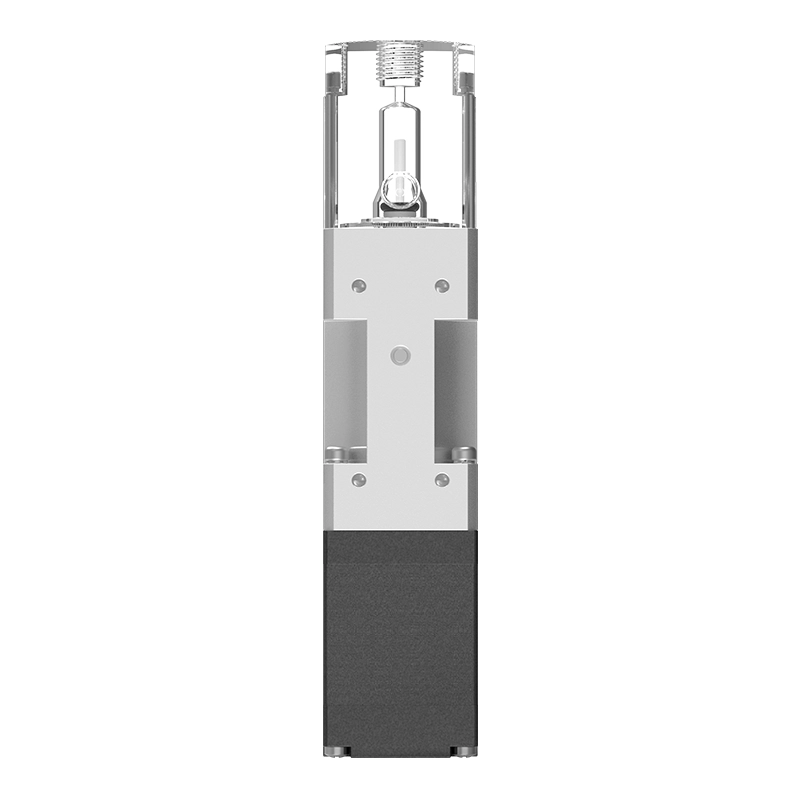
SM-50-PMMA is a miniature reagent dispensing pump with a nominal capacity of 50 μL for microliter reagent addition and dosing into small-volume reaction mixtures in compact analyzers. A PMMA head and ceramic piston use a compact stepper drive for aspiration and metered dispensing.
Ports are available in 1/4-28 UNF or M6, with 2000 steps per full stroke. Full-stroke repeatability is ≤0.5%, with an anticipated life of 5 million cycles; dispensing accuracy is confirmed for the selected configuration. Optical feedback, valve assemblies and a controller are available for dosing control in compact instruments.
OEM configurations offer PMMA, PSU, POM or PEEK heads and ceramic, stainless steel or PEEK pistons. Dispensing probes, tubing and mounting arrangements can be matched to reagent properties and the available instrument space.
Application Areas:
Select capacity, pump head material and accessories, then save different configurations for your inquiry.
| Nominal capacity | 50 μL |
|---|---|
| Pump head material | PMMA (polymethyl methacrylate); Transparent |
| Piston / seal | Ceramic / UHMWPE (ultra-high-molecular-weight polyethylene) |
| Fluid port | M6 flat-bottom port |
| Basic motor configuration | 1.8°; 2000 steps per full stroke |
| Nominal resolution | 0.025 μL/step (50 μL ÷ 2000 steps) |
| Mounting | 4 × M3; spacing 15 × 35 mm, thread depth 4 mm |
| Accuracy / repeatability at 100% stroke | 0.5% / 0.5% |
| Repeatability at 2% stroke | 1.5% (with backlash compensation) |
| Backlash | <1.0%; validate compensation for precise dosing |
| Fluid pressure | <0.30 MPa |
| Expected service life | 5 million cycles (pure water, room temperature, 50 kPa back pressure) |
| Fluid / ambient operating temperature | 15–30 ℃ / 10–40 ℃ |
| Operating humidity | 30%–85% RH, non-condensing |
Nominal resolution is capacity divided by full-stroke steps, not the minimum reliable dose. 2% of 50 μL is 1 μL. Validate actual reagent results at this dose with the selected valves, tubing, back pressure and drive settings.
Low-range repeatability assumes backlash compensation. Match wiring, ports and mounting holes to the supplied version; do not transfer them between series.
SM-50-PMMA is designed for aspiration and metered dispensing inside instruments. The miniature design uses a 28-size stepper motor. Check capacity, working stroke, four-hole mounting and drive configuration together.
Prioritize repeatability at the target small volume. The 50 μL reservoir limits consecutive dosing; include refill, valve switching and priming in cycle time, and check residual tubing volume.
The transparent head allows observation of filling and bubbles. PMMA (polymethyl methacrylate) is not resistant to alcohol or strong acids; both process and cleaning fluids must meet these material limits.
4 × M3; spacing 15 × 35 mm, thread depth 4 mm. Check working stroke and mounting dimensions separately. Leave room for fittings, wiring and moving parts.
This version has M6 flat-bottom ports, a 2000-step stroke and a 0.67 A/phase motor with 3 Ω ±0.3 Ω winding resistance.
The SM bare pump requires a stepper driver. For an integrated valve and communication control, check SMVD. RS-232, RS-485 and CAN belong to the corresponding driver configuration and cannot connect directly to bare motor leads.
Fluid temperature 15–30 ℃, Fluid pressure <0.30 MPa. Expected service life 5 million cycles (pure water, room temperature, 50 kPa back pressure); validate with the actual fluid, drive and maintenance conditions.
Prioritize repeatability at the target small volume. The 50 μL reservoir limits consecutive dosing; include refill, valve switching and priming in cycle time, and check residual tubing volume.
| Stroke configuration | Full steps per stroke | Nominal volume per step |
|---|---|---|
| 2000 steps | 0.025 μL/step |
200steps
5 μL ÷ 50 μL × 2000 steps = 200 steps
Nominal steps are for command conversion, not the minimum reliable dose or measured accuracy.Calculated from capacity and full-stroke steps; volume per step is rounded for display. Validate microstepping, backlash, bubbles, valves and tubing at the target volume.
The 2000-step version has a nominal increment of 0.025 μL/step, not a minimum reliable dose. A different stroke or motor requires rechecking calculations, ports and wiring.
This model has a PMMA (polymethyl methacrylate) head and ceramic piston. The transparent head allows observation of filling and bubbles. PMMA (polymethyl methacrylate) is not resistant to alcohol or strong acids; both process and cleaning fluids must meet these material limits.
| Head material | Selection considerations | Compatibility checks |
|---|---|---|
| PMMA (polymethyl methacrylate)Transparent · Current head | Consider when priming and bubbles must be visible. | Not resistant to alcohol or strong acids, including during cleaning. |
| PSU (polysulfone)Transparent options | Another candidate when transparency is required. | Confirm resin grade, fluid and seal combination. Material name does not change the pump temperature limits. |
| PEEK (polyetheretherketone)Opaque | Consider for opacity or further chemical compatibility assessment. | Check formulation, concentration and temperature; not resistant to every acid, alkali or solvent. |
| POM (polyoxymethylene)Opaque options | Compare against head geometry and fluid requirements. | Confirm acids, oxidizing cleaners and prolonged immersion separately. |
These are SM material comparisons; confirm head, port and seal as a set. Zirconia ceramic, SUS316L or PEEK pistons may be assessed per project; this ceramic configuration does not cover other pistons. Include UHMWPE seals in compatibility checks.
View material compatibility referencesThe 50 μL version uses a 0.67 A/phase motor with 3 Ω windings. Motor and adapter terminal numbers differ; identify the connector first.
| Rated phase current | 0.67 A/phase |
|---|---|
| Step angle | 1.8° |
| Winding resistance | 3 Ω ±0.3 Ω |
| Terminal / wire colour | Winding |
|---|---|
| 6 · Blue | Winding terminal A |
| 4 · Red | Winding terminal C, paired with A |
| 3 · Green | Winding terminal B |
| 1 · Black | Winding terminal D, paired with B |
The table numbers refer to the 51065-0600 motor connector. At the PHR-4 adapter, blue, red, green and black map to 1, 2, 3 and 4. Equal phase current does not imply equal winding resistance or connectors.
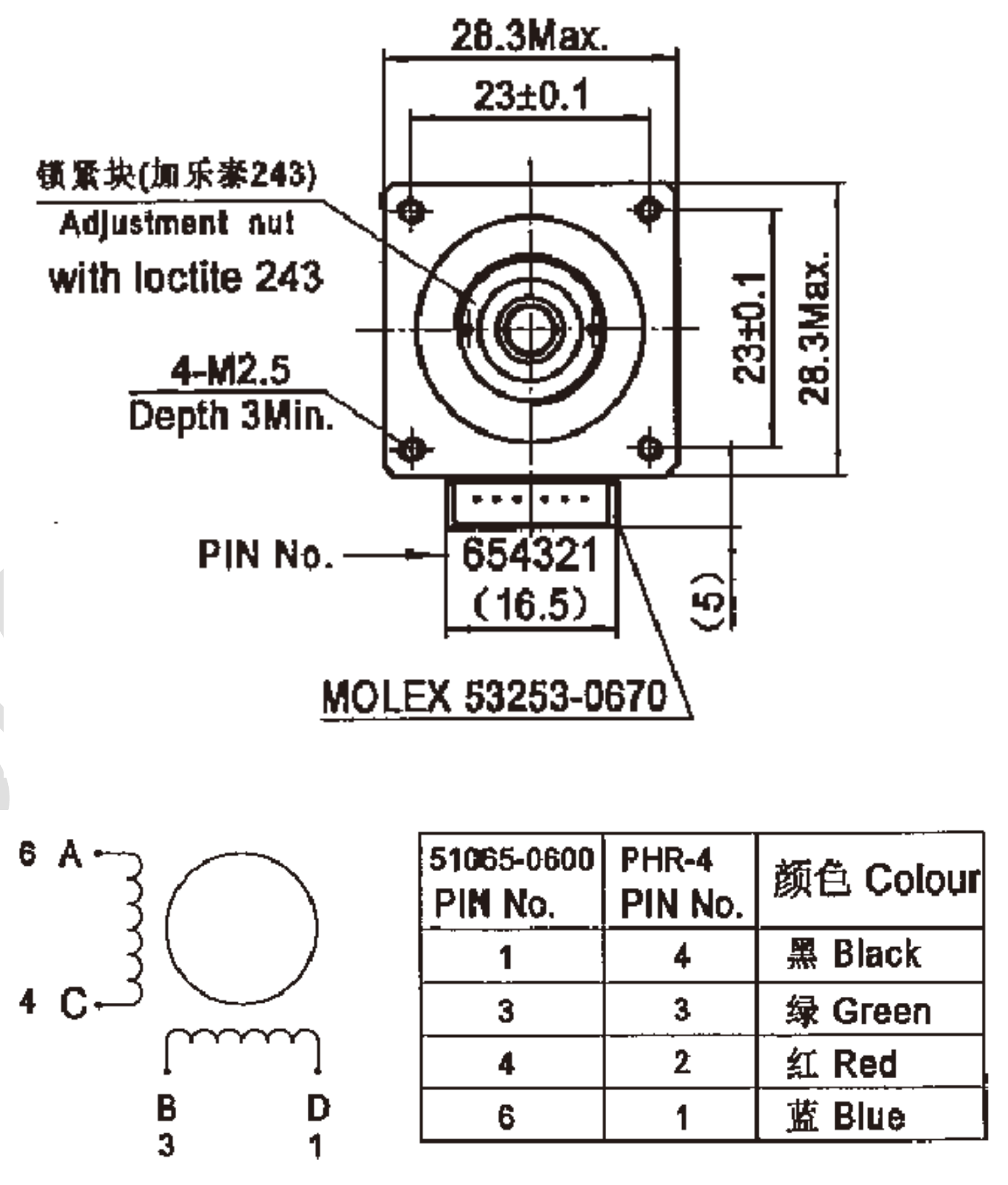
Rated phase current is a winding parameter, not power-supply input current. Check peak/RMS definitions. After setting microstepping and ramps, recheck motion, temperature rise and dispensing.
Use the integrated drive’s specified supply, address and protocol. Initialize and home before motion commands; check busy and error responses. Convert protocol position units using stroke and microstepping; they are not μL.
The current 50 μL version has a four-wire sensor with separate LED and signal circuits. Check external current limiting, pull-up and input logic levels first.
| Terminal / wire | Connection and function |
|---|---|
| Red | LED anode; connect a series current-limiting resistor before power-up |
| Black | LED cathode |
| White | Signal output; use a matching pull-up resistor |
| Green | Output logic supply return |
For a red-wire supply of 5 V, 12 V or 24 V, reference series resistors are about 200 Ω, 470 Ω or 1 kΩ respectively. Check board input levels and the white output pull-up. Measure blocked and unblocked states before setting the homing level.
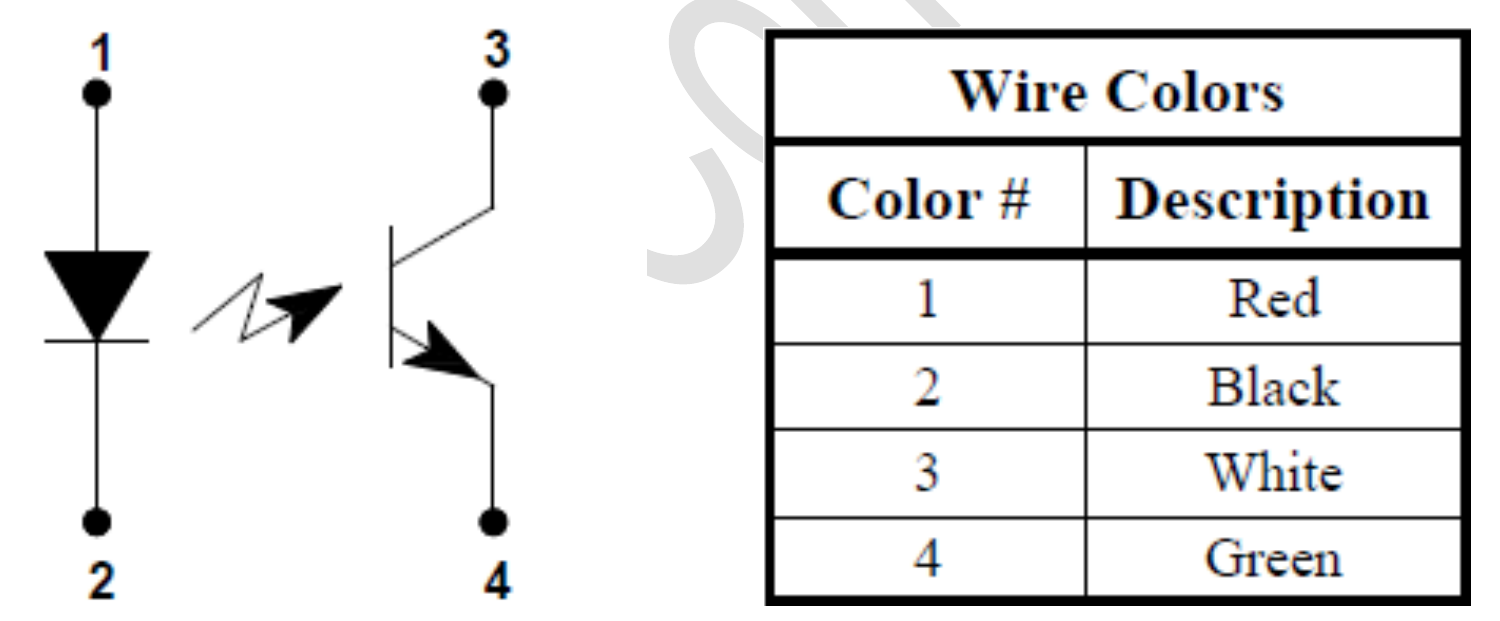
Validate post-trigger stopping clearance for the mechanism, speed and stopping method. Recheck home position and usable stroke after motor, sensor or drive changes.
M6 flat-bottom port. Match fittings, seals and tube OD as a set; even identical threads require checking port depth and sealing face.
For doses up to 20 μL, rigid tubing after the shut-off valve is recommended. Diameter, length, valve location and connections all affect delivery.
Fluid 15–30 ℃, ambient 10–40 ℃, humidity 30%–85% RH, non-condensing.The 50 μL fluid-temperature limit is 30 °C; do not use the 40 °C limit of other capacities.
Confirm SM-50-PMMA capacity, head, harness and ports. Fluid temperature: 15–30 ℃; ambient: 10–40 ℃. Stop the instrument and disconnect power before changing wiring or fluid connections.
4 × M3; spacing 15 × 35 mm, thread depth 4 mm. Position the bracket using the mounting drawing, preferably with the outlet upward for air removal. Leave slack in tubing and wiring to avoid pulling on the head.
M6 flat-bottom port. Check hole depth, tube outside diameter and seals together. Recommended torque for the corresponding plastic fittings is 0.25–0.30 N·m. Do not substitute PTFE tape or thread sealant for a flat-bottom seal.
Identify both windings for the selected motor, then check sensor wire colors, supply, current limiting and pull-up circuits. Verify 50 μL winding resistance separately from other SM versions.
Basic full stroke is 2000 steps. Check direction and sensor state at a controlled speed, then verify stopping clearance after triggering. Recheck command units when changing microstepping; do not use the mechanical limit as the operating endpoint.
Observe filling, bubbles and leaks in the transparent head and tubing. Coordinate aspiration, valve switching and dispensing. Collect repeated target doses and verify backlash compensation. For dosing up to 20 μL, rigid tubing downstream of the shut-off valve is recommended. Avoid prolonged dry running.
Record fluid, temperature, backpressure, target and individual collected volumes, tubing, valve timing, drive and compensation settings. Compare mean error and repeatability; retest with the same method after any change.
After maintenance, recheck home position, priming and target volume. Contact technical support for disassembly or jamming.
Nominal capacity is 50 μL with 2000 basic full-stroke steps, or 0.025 μL/step. This ratio converts motion commands. Validate the minimum reliable dose at the target volume, accounting for bubbles, backlash, valve operation and tubing elasticity.
Share the target volume, fluid compatibility, port type, control method, installation space, and service-life requirements. The Foreach engineering team can help confirm the pump configuration and wetted materials.